Quote of the Day

Saturday, April 23, 2011

Indian Gastrodiplomacy to Help Feed Perceptions of an Emergent India


As an emergent India is asserting itself within the ever-evolving global power dynamic, India is having a vibrant discussion about public diplomacy andnation-branding, and how to engage in channels of public diplomacy as a means to project its emergence; now is the perfect time for India to start cooking up a gastrodiplomacy campaign.
Public diplomacy works to communicate culture and values to foreign publics; gastrodiplomacy uses culinary delights to appeal to global appetites, and thus helps raise a nation's brand awareness and reputation.
As this author previously noted in this fair site, Thailand was the first to engage in gastrodiplomacy as foreign policy, while South Korea and Taiwan have also been cooking up culinary diplomacy of late. Meanwhile, Malaysia has been conducting a dynamic Malaysian Kitchen for the Worldgastrodiplomacy campaign that has combines elements of culinary and cultural diplomacy by showcasing its cuisine and culture in nightmarkets set up in London, New York and Los Angeles.
Indian Gastrodiplomacy
India is a natural spot to conduct gastrodiplomacy ("Samosa Diplomacy"), as India's mark on global cuisine is profound. It was the quest for India's spice bounty flavored the European age of exploration and sent intrepid navigators sailing around the Cape of Good Hope to reach India's shores. As Shashi Tharoor noted, today in Great Britain -- the isle that once considered India to be her crown jewel -- Indian curry houses employ more workers in the UK than the iron, steel, coal and shipbuilding industries combined.
In an age of increasing obesity and heart disease in the West as related to Western diets, as well as diseases outbreaks like BSE, E. coli and salmonella that have plagued meat supplies, India's more healthy vegetarian diet could be a source of soft power for India. India would be wise to take the advice of Beatles legend and vegetarian enthusiast Paul McCartney, and declare an "International Vegetarian Day."
Yet so much of what passes for Indian food abroad stems from its northern Punjabi cuisine. India would be wise to start promoting the delicious and fresh cuisines that are found in its southern regions like the banana-leaf sadya thalis with its delectable coconut chutneys, idlys (lentil cakes) and vadas (donut fritters) or the rice and black lentil crepe dosa stuffed with masala potatoes and onions.
Meanwhile, India would be smart to promote the delicacies that are found at a more local level.Indian street food never seems to make its way to Western palates, which have sadly been missing out on the multitudes of dishes that local Indians savor. Also, it is culinary fare that is often a bit more posh and pricey. The hearty, cheap and delicious street food treats like chole (fiery chickpea curry) with puri (fried bread), aloo tikki (potato croquettes stuffed with spices and served with mint, tamarind and yogurt) and a multitude of various savory chaat snacks.
And what is dinner without dessert? Indian sweets like the immaculate barfi (condensed milk squares), kulfi (sweet, creamy traditional Indian ice cream) and the delectable gulab jamun (fried dough balls swimming in rosewater syrup) could all be after-dinner favorites for an Indian gastrodiplomacy campaign. Of course, such would go well with a cup of India's famous spiced tea -- the sweet, milky and gingery chai.
In Delhi, the Indian Ministry of Tourism -- in collaboration with a variety of other ministries and tourist boards, helps host the popular tourist destination Dilli Haat, a rural market-style center to showcase Indian crafts and cuisine from all across India's varied 28 states. Such efforts should be distilled into a traveling cultural diplomacy campaign sent abroad, much like the innovative Malaysian night market initiative, to bring wide-ranging examples of Indian cuisine and culture to wider global audiences. When culinary diplomacy is combined with cultural diplomacy, it is at its most successful as it engages all the senses.
Indian cuisine has always been an informal part of Indian public and cultural diplomacy; what is required today is a more focused use of gastrodiplomacy in its public diplomacy efforts. As India is conducting public diplomacy and cultural outreach campaigns, like the immaculate India Callingevent in Los Angeles or the wildly successful Maximum India festival in Washington, DC, to introduce global audiences to the cultural reality of an emergent India, it is also time for India to engage in more robust gastrodiplomacy to raise the cultural awareness for all of India's cuisine heritage.
A gastrodiplomacy diplomacy campaign could help raise Indian brand awareness, spur tourism and introduce global diners to the authentic Indian palate. A bit of digestive diplomacy is just the dish to help pique global interest and appetites in the new India.
Paul Rockower is a gastronomist and graduate of the Master's of Public Diplomacy program at the University of Southern California. Rockower works as a Public Diplomacy Guru with INDIA Future of Change, an organization that conducts Indian public diplomacy and nation branding.
source: www.huffingtonpost.com

Friday, April 22, 2011

Is Hazare another Seshan?


"Do you know how elections are run in this country? Liquor for the father, cloth for the mother and food for the baby."
"What is not corrupt in this country? India's central vice is corruption; the centrality of corruption is election corruption; and the centrality of election corruption is the business houses."
The above quotations certainly sound like Anna Hazare, the new apostle from Ralegan Siddhi, only they're from an earlier generation when another anti corruption crusader, a certain T N Seshan was being feted across the country as the great middle class hope.
Remember Seshan? The garrulous chief election commissioner whose 'war' against corruption inspired fear among the politicians and awe among the middle classes in the mid-1990s. Seshan's efforts did see a reduction in overt election expenses, but within a few months of retiring as CEC, he attempted to beat the netas by joining them. In 1997, he lost the presidential elections as a Shiv Sena candidate while in 1999; he lost by over 1.8 lakh votes as the Congress-backed candidate against L K Advani in Gandhingar. Twice hurt, Seshan eventually retired to a quieter life in Chennai, embraced by Rotary clubs but forgotten by the vast multitude of citizens.
Will Anna Hazare end up as the Seshan of our generation; celebrated today, gone tomorrow? There are important differences between Seshan and Hazare. The former earned his authority from the office he held: as chief election commissioner, Seshan was able to revive a dormant institutional post, give it a bite that it had lacked for decades. Hazare, by contrast, holds no official position but is a bit of a traveling fakir, who can move easily from one issue to another with his disparate bandwagon of activists.
Driven by ego, Seshan forgot that once he stepped down from his office, the power too would go. Hazare has no such fears. Indeed, he derives his stature from being outside the political system, from being seen as a freelance Gandhian, always ready to inject a certain moral outrage towards a corrupted state machinery through personal example. Seshan had, after all, been a civil servant for much of his life; he was in that sense a representative of the state. Hazare is the army driver who turned village sevak, someone who has always been completely outside the charmed power elite.
Both Seshan and Hazare have derived their legitimacy from the cheering middle classes, but with one big difference. In the 1990s, the Indian middle class appeared to be completely impotent in the face of political venality. Today, the middle class has found a new weapon in round-the-clock television news. Hazare's 'revolution' fired the imagination of the middle classes because the television cameras brought it instantaneously into the homes of millions of Indians. When Seshan was taking on the netas, there wasn't a single private television news channel in the country. Now, when Anna decided to go on a fast unto death at Jantar Mantar, it became a 'made for tv' moment, artfully choreographed between the World Cup and IPL so as to gain maximum eyeballs. In a country with over 100 million homes with cable and satellite TV, Hazare became an instant national figure in a manner that Seshan took years to achieve.
And yet, there are worrying similarities too. Like Seshan, Hazare is also a bit of an authoritarian figure who believes that Gandhian values must be combined with a certain Shivaji-like aggression. Hazare's 'model village' in Ralegan Siddhi is based on a rejection of any dissent, or alternate viewpoints, and a certain element of coercion, with alcoholics for example being publicly flogged. The anti-democratic streak has also seen many of his close aides even part company with him over the years.
Moreover, Hazare hasn't always been discriminatory about the people around him, some of whom have tried to manipulate his simple-mindedness. He almost paid a heavy price for this in 2005 when the Justice Sawant commission report concluded, "The expenditure of Rs 2.20 lacs from the funds of the Hind Swaraj Trust for the birthday celebrations of Shri Hazare was clearly illegal and amounted to a corrupt practice." That Hazare still managed to survive the indictment is a testimony to the credibility he had earned from decades of working for a better society.
There are obvious dangers when the hopes of an entire movement are reposed in an individual, someone who self-confessedly admits to being no Mahatma. Unfortunately, middle class activism has not matured enough to develop the momentum and self-belief to go beyond constantly searching for demi-gods who will slay the political demons of our time. In the Seshan era, there were anti-corruption signature campaigns and seminars. Today, we have candlelight marches and social media networks that attempt to compensate for a more meaningful engagement with public life. The rage may be real, the desire for change may be well-intentioned, but can it really transform society unless it goes beyond the clever soundbite, or the 'mera neta chor hai' slogan?
The real success of a 'peoples' movement' in the war against corruption will come when it doesn't stop with a Lokpal or an Anna Hazare. The challenge is to throw up Anna-like figures and collective groups like Bangalore's Janagraha in every mohalla in this country. We need organized local communities who will hold their elected representatives accountable at all levels, from the Gram Sabha to the parliament. Rather than deify Anna, let's imbibe the spirit of sacrifice and voluntary service that is the mark of his work. The message must matter more than the individual if Anna is not to end up as just another transient middle class icon.
The writer is presently Editor-in-Chief, ibn18 Network.

Friday, April 22, 2011

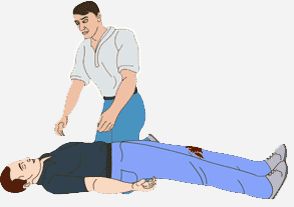
First Aid in Road Accidents


Many deaths and impact of injuries can be prevented with First Aid if causalities are treated immediately.

First aid is the initial care given to an injured person. Mostly, this timely care prior to the arrival of the medical help means the difference between life and death. It must start immediately when the injury or illness occurs and continue until medical help arrives or the casualty recovers.


The basic aims of first aid are:
  1. To save life.
  2. To protect the casualty from getting more harm.
  3. To reduce pain and Priorities of Casualty Treatment.

Priorities of Casualty Treatment
  • Asphyxia
  • Cardiac Arrest
  • Severe Haemorrhage (Bleeding)
  • Other Injuries/Illnesses
  • Shock
IMMEDIATE REQUIREMENT:


Critical four minutes: One of the most common causes of a road accident death is due to loss of oxygen supply. This is mostly caused by a blocked airway. Normally it takes less than four minutes for a blocked airway to cause death.


The 'golden hour': The first hour after the trauma is called the 'golden hour'. If proper first aid is given, road accident victims has a greater chance of survival and a reduction in the severity of their injuries.


Friday, April 22, 2011

Pak: Trenching on failure?


Nation-states, history shows, can take a lot of punishment despite being ravaged by internal and external conflicts. The American Civil War is a good example of an internal conflict and the two great wars of the 20th Century offer examples of external conflicts of terrible magnitudes. In at least two cases much bloodshed and violence also gave rise to peace and prosperity for friends and foes alike, bridging differences and creating, in one case, a stronger nation, and in the case of World War II, new alliances. The American strategist Bernard Brodie in Strategy in the Missile Age refers to the father of modern economics, Adam Smith, as calming “a young friend’s fear that England would suffer ruin in its wars against Napoleon with the comment, ‘Sir, there is a lot of ruin in a nation.’” True. But equally, nations perish by and through conflict. The most important factor, one that can perhaps not be measured quantitatively, is how much of the nationhood there is in a nation for it to have enough ruin. That seems to me to be the determining factor in judging the health of a nation, far more, in fact, than other indicators we normally associate with the viability of a nation-state. It should be obvious that I am taking as a given the idea of a nation-state, a collection of people with a sense of belonging and a legal-social contract that binds them together in and through a discourse whose fundamentals, over a period of time, are internalised by a collection to a point where they are not disputed and where external challenges to the collective identity are simply not entertained. Would it be correct to make this assumption regarding Pakistan, 63 years of the country’s existence and outward manifestations of nationhood notwithstanding? Even sympathetically put, one would have to concede that the process of such integration is far from over and, in some ways, might not be headed in the right direction. Of the many challenges faced by Pakistan today, one relates to the threat from the extremists. One set of them is active in the northwest and also the urban centres; the other threat is the supra-state mindset that manifests itself through such acts as the murder of Governor Salmaan Taseer and Minister Shahbaz Bhatti, killings justified and celebrated in the name of religion. Both are challenges to state authority. But while one, the armed extremist insurgency, can be tackled through use of kinetic force, we sorely lack the means to challenge the discourse that has seeped into society and makes a mockery of the legal-constitutional arrangements that make up and sustain the state. One defence against this threat could have been the liberal enclave. That has not happened because the state itself put down the liberal enclave over the years and that process of marginalisation, and quite often persecution, has alienated the liberals from state and the institutions that represent its coercive arm. This to me, increasingly, is another challenge, not in the sense of the other two challenges but of its own kind. The liberals fear the extremists, as they must, but they equally abhor the state and its coercive arm. This makes them look out for a discourse that rejects both extremism and the state in its current configuration. In theory, one can live with this rejectionist formulation. But theory in these hard times is a luxury not many of us can afford. So, one is constrained to ask the question of how this rejectionist formulation can become a political course of action – if at all? It should be evident that any viable political course of action must have a unit of analysis as also an organising principle. The liberals reject religious creeds as offering either a unit of analysis or an organising principle. I agree. But when they also reject the state, they end up looking like Beckett’s tramps waiting for something to happen which won’t. Of course, the liberal enclave is correct in disagreeing with the state as currently configured. The civil-military imbalance is one aspect of it and fundamental to many of our current problems, including the rise of religious extremism. The liberals are justified in being wary of the military and its designs. Even today, as the military fights the extremists and loses officers and men, the liberal enclave refuses to accept that it’s not a tanked conflict. Even objective analyses of the military are considered as manufactured in its favour and thus suspect. Understandable this is but also problematic. If Pakistan is to become a viable state the liberal enclave has to get into the driver’s seat. And for it to do so, far from rejecting the state, it has to embrace it and change the discourse by accepting the state as the organising principle and redirecting its coercive apparatus. It makes no sense to live in theory and remain unable to transform the state’s direction. How? The important thing is to identify correctly the principal contradiction. Events have put the military against the extremism generated by its own policies. This makes it an ally of the liberal enclave in the latter’s fight against extremism. This also means the principal contradiction has shifted. By rejecting the state and its coercive apparatus, the liberal enclave is not doing itself any good in its fight against extremism. This is the opportunity to take charge. In this would also lie the opportunity to win more space for a reconfigured state, one that posts, to quote Peter Feaver, “a military strong enough to do anything the civilians ask with a military subordinate enough to do only what civilians authorise.” Is the liberal enclave prepared to do that? Unfortunately, no. It laments the loss of space, it carries out vigils, but is not ready to get down to business and take responsibility for the functions of the state which require more than a bleeding heart and a third discourse that stagnates in a vacuum because it is not grounded in a viable unit of analysis and an organising principle. 
The writer is Contributing Editor, The Friday Times.

Friday, April 22, 2011

Says Mother Earth


Thursday, April 21, 2011

Kismat rashan me mil jati to kharid dete "harsh",
Suna hai chahat sachchii ho to aajkal kismat bhi 'black' hoti hai. :))


© 2011 SOMYA HARSH,. all rights reserved
Protected by Copyscape DMCA Takedown Notice Search Tool

Thursday, April 21, 2011

Ab har taraf gade murde ukhad rahe hain, 
aey "harsh" kahin tera shehar koi daba hua kabristan to nahi.. 
#corruption #accusations #counter-accusations


© 2011 SOMYA HARSH,. all rights reserved
Protected by Copyscape DMCA Takedown Notice Search Tool